Turn a research note into a source map
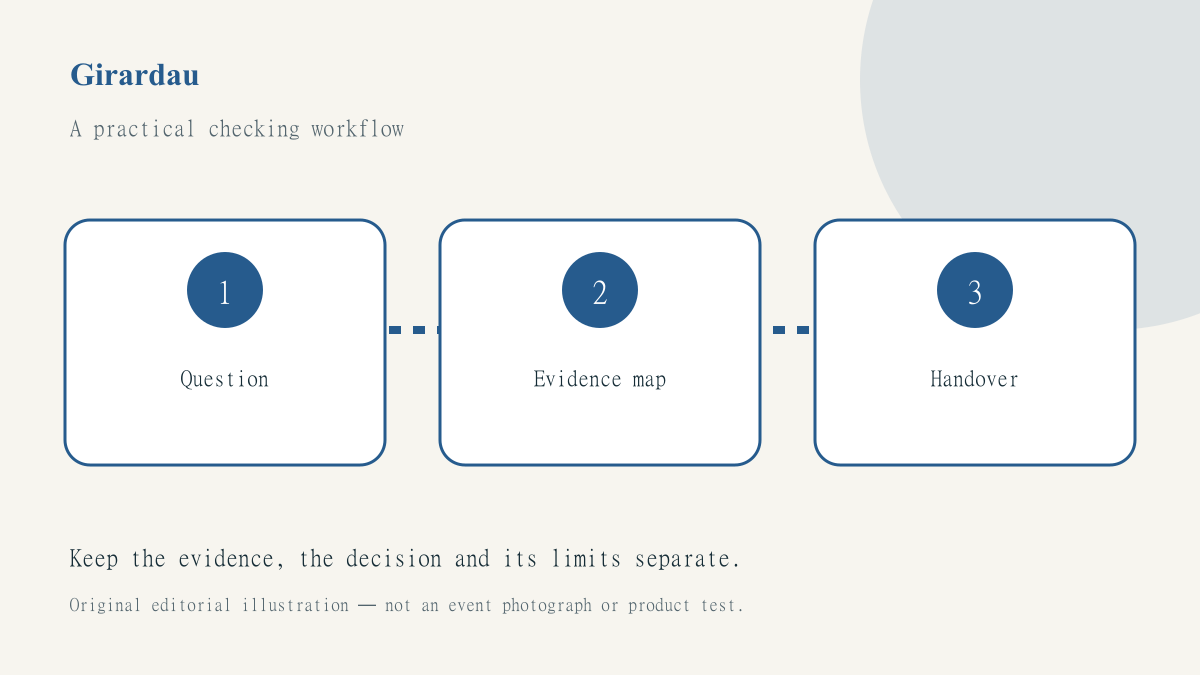
A digital research note often begins as a pile of links and becomes difficult to use just when a decision is due. The reader can see that plenty of material has been collected, but not which statement each page supports or whether several articles rely on one underlying announcement. A source map turns the collection into a working record without pretending that software has verified every claim.
The distinction in the news-aggregator explainer is the starting point. Discovery and verification are different activities. This guide shows how a person preparing a shared briefing can retain that difference in a browser-and-notes workflow. The suggested fields are an editorial method, not a claim that a particular application supplies them automatically.
Give the note a question and a stopping point
Write the decision question at the top of the document. A hypothetical project team might need to establish whether a public opening date has changed. That question is narrower than collecting everything recently written about the organisation. Define what would answer it: a current announcement from the responsible organiser, a clearly attributed report or a documented statement that the date remains uncertain.
Also define what the note will not decide. It may be able to establish a published date without predicting whether the project will succeed. Keeping that boundary visible reduces the temptation to turn an interesting opinion into evidence for a factual conclusion. It also helps a colleague understand why some saved material is background rather than a reason to change the plan.
Attach each link to a specific claim
Create a short row containing the claim, source URL, publisher, visible date and the relevant evidence. Record a concise paraphrase in your own words, and preserve any important qualification. A general statement that a page is useful is much less helpful when someone returns a week later and needs to understand which detail was actually checked.
Follow attribution. The coverage-comparison guide can help distinguish separate reporting from repetition. If three reports all rely on one statement, link them to the same source row. They can still provide helpful explanations, but counting them as three independent confirmations would misdescribe the evidence.
Separate fact, interpretation and action
Use three clearly labelled sections. Facts contain supported observations. Interpretation explains what the team thinks those facts may mean. Actions describe what someone has agreed to do. A note can reasonably contain all three, but trouble starts when a suggested action is copied back into the facts section as though it were an official announcement.
For example, an organiser’s notice may establish that an opening is delayed. A colleague may interpret that as a reason to postpone a visit. The team may then decide to rebook transport. Those are three distinct statements with different owners. Keeping them separate makes later corrections more precise and prevents a shared note from acquiring authority it never had.
Keep visual references in their own evidence trail
A photograph or screenshot needs more than a pasted thumbnail. Save the page where it appeared, the caption and what the note claims it shows. Use the photo-context checking routine when date or location matters. A recent message containing a picture is not proof that the picture itself is recent.
A screenshot can preserve what was visible during a check, but it is not a replacement for the source link. It may omit an update, hide a date or crop away a qualification. Label screenshots with their observation time and purpose. Avoid treating an attractive image as evidence for a broader claim than the original page actually supports.
Hand the note to another person and test it
Ask a colleague to find the evidence for one important sentence without help. If they have to reopen every tab, the source map needs work. Check that they can identify unresolved questions, the responsible decision-maker and the last meaningful update. A useful handover should survive the original researcher’s absence.
NewsBeagle can help discover attributed coverage, while the shared note should retain the route back to the reporting behind the conclusion. Our editorial method applies the same discipline to this publication: distinguish what was found from what was verified, and make corrections traceable rather than simply replacing yesterday’s confident wording.